
Budget 2026 UK startups get Founders Relief and £5bn for the BBB

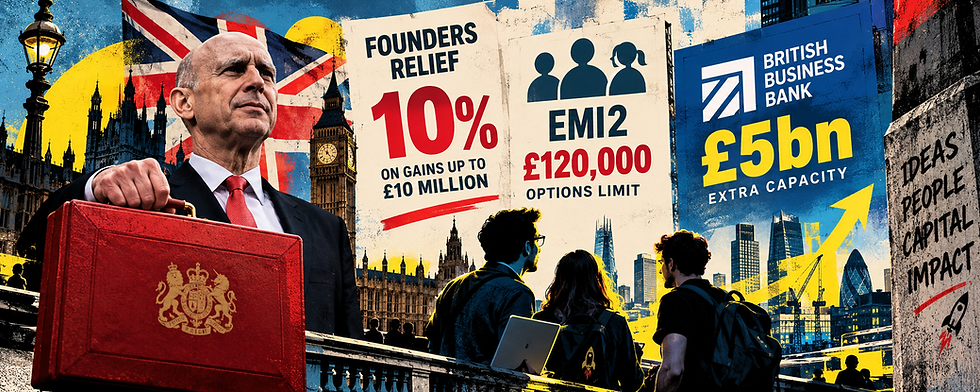
The Budget 2026 UK startups package, delivered by Chancellor John Healey on 28 October 2026, creates a Founders Relief with a 10 per cent rate on gains up to £10 million, doubles the option limit for scaleups outside EMI to £120,000 and adds £5 billion to the British Business Bank. Capital gains tax and VCT relief were left unchanged.
Founders Relief and EMI2: the founder tax changes
Founders Relief applies a reduced rate of 10 per cent to founder gains up to a £10 million lifetime limit. Eligibility is tighter than the earlier Entrepreneurs' Relief and Business Asset Disposal Relief (BADR). It requires significant research and development spend, and 25 per cent requirements on headcount and turnover for consecutive years. A technical consultation will follow, so the definition can still move.
BADR stays for existing companies that fall outside the new scope, but its lifetime limit is halved to £500,000. Capital gains tax was not raised, and the 24 per cent rate remains for gains above the Founders Relief limit despite lobbying to align it with income tax.
A worked example shows the size of the change. On a £10 million gain, 10 per cent is £1 million of tax against £2.4 million at 24 per cent, a saving of £1.4 million. On a £15 million gain, the first £10 million is taxed at £1 million and the remaining £5 million at £1.2 million, so total tax is £2.2 million, an effective rate of about 14.7 per cent. The example assumes the founder meets every eligibility test and ignores other reliefs and allowances.
EMI2 doubles the value of tax-advantaged options for employees at companies that fall outside the Enterprise Management Incentive (EMI) scheme, from £60,000 to £120,000. That removes a cliff edge for scaling companies that outgrow EMI, and it sits alongside the liquidity questions covered in PISCES for employees and EMI options.
British Business Bank capacity and VCT relief for investors
The British Business Bank gets about £5 billion of extra capacity over five years, alongside around £15.4 billion for the National Wealth Fund, a total of £20.4 billion across the two state-owned lenders. The Chancellor said the funds will support 140,000 jobs in strategic sectors. The Bank's share will go on corner-stoning new funds, a new venture debt product and an expanded loan scheme, building on the Bank's regional fund results. Its commitments to women-led businesses and funds double to £200 million.
The borrowing is not a direct breach of the fiscal rules, and Oxford Economics called it "an accounting trick to raise investment within the fiscal rules". For founders raising a first institutional round, the practical effect is more cornerstone capital behind venture funds, not a change to the rules on who invests.
For investors, the notable absence is VCT relief. Upfront income tax relief on Venture Capital Trusts fell from 30 per cent to 20 per cent in April 2026, and the Chancellor did not mention VCTs, despite a September call from the Association of Investment Companies and the VCT Association to restore the higher rate. Richard Stone, chief executive of the Association of Investment Companies, said it was frustrating that the relief was not restored to 30 per cent and that the cut will mean less funding for scale-up companies.
The Treasury did announce improvements to EIS, SEIS and VCT following its call for evidence. It will work with the FCA to improve transparency and comparability across funds, with an eye on fees, and with industry to improve advanced assurance for EIS and SEIS. Both are process fixes, not changes to relief rates, which leaves the position set out in the SEIS and EIS Budget preview largely intact.
The practical reading is that the Budget favours founders at exit over investors at entry. The largest cash gain goes to a founder selling a qualifying company, while the relief that funds the earliest rounds is unchanged. The counter argument is that a better exit tax and a larger public cornerstone investor can lift returns and fund supply over time, and the consultation may still widen Founders Relief.
Sovereign AI, defence and visas across the ecosystem
A £700 million-plus AI package includes a £140 million boost to the Sovereign AI Fund, £80 million to continue its R&D Procurement Scheme, and a Data Centre Covenant on local benefits, grid connection and on-site generation. A new definition of a UK supplier is due by January 2027, so the effect on startups selling to government cannot yet be measured.
The National Wealth Fund and British Business Bank will put up to £5 billion into defence and dual-use firms over four years, with a £138 million quantum package. Nothing new was announced on moving from pilot to production or on contracting reform.
On talent, the government confirmed a ban on non-competes, with consultations on gardening leave and non-solicit clauses to follow. The High Potential Individual visa extends to graduates of the world's top 150 institutions, and the Graduate visa extends to two years for graduates of high-compliance universities. There was no new support for scale-up energy bills.
None of the measures in the coverage reviewed addresses PISCES, secondary share trading or tokenised shares, so liquidity for founders and employees still rests on the rules already in place. The items to watch are the Founders Relief technical consultation, the FCA work on fund fee transparency and the non-compete consultations. For the earlier funding picture, see how the founder roadshow found the tax system does not reward founder risk.
This is general information, not legal, tax or investment advice.
Key takeaways
Founders Relief sets a 10 per cent rate on founder gains up to a £10 million lifetime limit, with tight eligibility and a technical consultation to come.
BADR remains for existing companies outside the new scope, with its lifetime limit halved to £500,000, and the 24 per cent capital gains tax rate is unchanged.
EMI2 doubles tax-advantaged option value for scaleups outside EMI from £60,000 to £120,000.
The British Business Bank gains about £5 billion of capacity for cornerstone fund commitments, venture debt and loans.
VCT upfront relief stays at 20 per cent, and EIS and SEIS received process improvements, not new relief rates.
Sources
Budget 2026: Healey uses state-backed lenders to ramp up borrowing, City AM, 2026-10-28
Budget 26: 'Frustrating' VCT tax relief absent from Budget despite industry lobbying, Investment Week, 2026-10-28
BBC



Comments