
Ondo and Broadridge Bring Full Voting Rights to Holders of 250 Tokenised US Securities

Updated: Oct 7
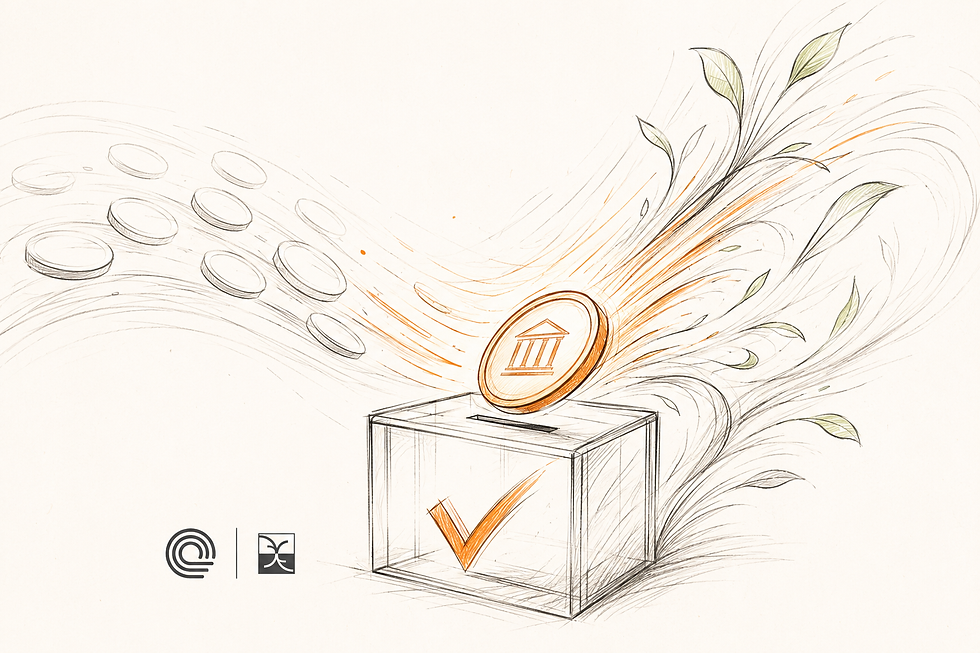
An important word in the tokenisation story this week was not price or listing. It was voting.
On 2 July, Ondo Finance and Broadridge Financial Solutions launched what they describe as the first live, third party tokenised US securities operating fully within the existing regulatory perimeter, and they wired real shareholder governance into them from day one.
Holders of these tokens can vote their shares.
That sounds like a back office detail. It is closer to the centre of the whole argument for tokenised equity than any headline about market size.
What was launched
Ondo, a company building institutional grade finance onchain, went live with the first production deployments of a tokenised model covering third party securities that stay inside US rules rather than routing around them. The opening assets are a tokenised version of BlackRock's iShares Core S&P 500 ETF and tokenised Micron stock. Crucially, Ondo partnered with Broadridge, the incumbent that already runs proxy voting and investor communications for much of Wall Street, to extend those same governance rights to token holders across more than 250 tokenised securities.
Through Broadridge, holders of Ondo's tokens get proxy voting, issuer communications and regulatory disclosures, the full set of rights a conventional shareholder expects. The point the two firms are making is that tokenisation does not have to strip an investor of the rights that come with owning a share. Those rights can travel with the token.
Why governance is the real unlock
Early tokenised equity often gave holders economic exposure but quietly dropped everything else. You might track the price of a share without being able to vote it, receive company communications, or exercise the rights that make ownership more than a bet. For retail speculation that gap did not matter much. For serious capital, and for any founder who wants tokenised shares to be taken seriously by institutions, it matters enormously.
By plugging tokenised securities into the same proxy and disclosure rails that govern ordinary shares, Ondo and Broadridge are trying to make an onchain share indistinguishable, in the eyes of the law and the investor, from a paper one. Ownership onchain becomes full ownership, not a lesser cousin.
The UK read across
British founders and their advisers should watch the governance layer, not the tickers. The editorial question that runs through tokenised equity is not only whether it is cheaper or faster to issue, but who holds power in a capitalised company. Voting rights, board influence and information are power. A tokenised share that carries no vote hands the upside to holders while keeping control elsewhere. A tokenised share that carries a full vote, communications and disclosure keeps the ownership intact and simply changes the rails it runs on.
That is the model the UK will need if tokenised equity is to serve founders and long term investors rather than short term traders. The Digital Securities Sandbox and the PISCES venues for private company shares will each have to answer the same question Broadridge is answering here, namely how a holder of a tokenised private share actually exercises the rights that come with it. This week gives one working template.
Key takeaways
Ondo and Broadridge launched the first live third party tokenised US securities operating inside existing US rules, starting with a tokenised BlackRock S&P 500 ETF and Micron stock.
Broadridge extends full proxy voting, issuer communications and disclosures to holders across more than 250 tokenised securities.
The move closes the governance gap that has made tokenised equity look like exposure rather than true ownership.
For UK markets, the lesson is that tokenised shares must carry the rights of real shares, the question the DSS and PISCES venues will also have to solve.
Sources: PR Newswire, Ondo Finance, Broadridge.
How Ondo and Broadridge got here: timeline
July 2026: On 2 July, Ondo and Broadridge went live with the first production deployments, starting with a tokenised iShares Core S&P 500 ETF and tokenised Micron stock.
May 2026: On 5 May, Broadridge extended its proxy voting and disclosure platform to all three tokenisation models recognised by the SEC: registered, issuer-sponsored and third party-sponsored. Ondo Finance and Galaxy Digital, an issuer-sponsored platform, were named as the first adopters. Votes are recorded on a Broadridge-operated, Avalanche-based layer-1 blockchain that can pass votes to other chains. Retail investors vote through ProxyVote and institutions through ProxyEdge, while issuers get one view across registered, beneficial and tokenised share classes. Broadridge announcement
April 2026: On 28 April, Ondo Finance and Broadridge announced a partnership giving holders of more than 250 tokenised stocks and ETFs on Ondo's Global Markets platform access to proxy voting and regulatory filings. Token holders log in with their crypto wallets, review filings through Broadridge's investor communications portal and vote directly, without moving the position to a traditional broker. At the time Ondo held about 70% of the tokenised stock market, with more than $700 million in total value locked. CoinDesk report
Frequently asked questions
What did Ondo Finance and Broadridge launch on 2 July?
They launched what they describe as the first live third party tokenised US securities operating fully within the existing regulatory perimeter. Shareholder governance rights, including voting, were built in from day one.
Which assets were the first tokenised securities in the Ondo launch?
The opening assets were a tokenised version of BlackRock's iShares Core S&P 500 ETF and tokenised Micron stock.
What rights do holders of Ondo tokenised securities get through Broadridge?
Through Broadridge, token holders get proxy voting, issuer communications and regulatory disclosures across more than 250 tokenised securities. These are the rights a conventional shareholder expects.
Why do voting rights matter for tokenised equity?
Early tokenised equity often gave holders economic exposure without the vote, communications or other rights of ownership. Carrying full governance rights makes a tokenised share closer to true ownership rather than price exposure.
What does the Ondo and Broadridge model mean for UK tokenised shares?
The Digital Securities Sandbox and the PISCES venues for private company shares will have to answer the same question of how a holder of a tokenised share exercises the rights that come with it. The Ondo and Broadridge launch offers one working template.
How do Ondo token holders cast a vote in practice?
Token holders log in with their crypto wallets, review prospectuses and regulatory filings through Broadridge's investor communications portal, and vote directly. They do not need to hold shares through a traditional broker or convert the token back into a conventional security.
Does Broadridge proxy voting cover every model of tokenised security?
Yes. On 5 May 2026 Broadridge extended proxy voting and disclosure to all three SEC tokenisation models: registered, where the token is the security; issuer-sponsored, where the issuer runs its own blockchain register; and third party-sponsored, where a platform holds the securities in custody and issues tokens representing beneficial interests.


Comments